
Insights from the Field
What delivering renewable energy and infrastructure projects across the South Pacific actually looks like — drawn from direct field experience across five Pacific Island nations.
What Five Hours of Daily Travel Teaches You About Pacific Project Delivery
Most project plans built outside the Pacific underestimate the time cost of distance. This piece is about what happens when you actually measure it — and what it means for how projects need to be designed.
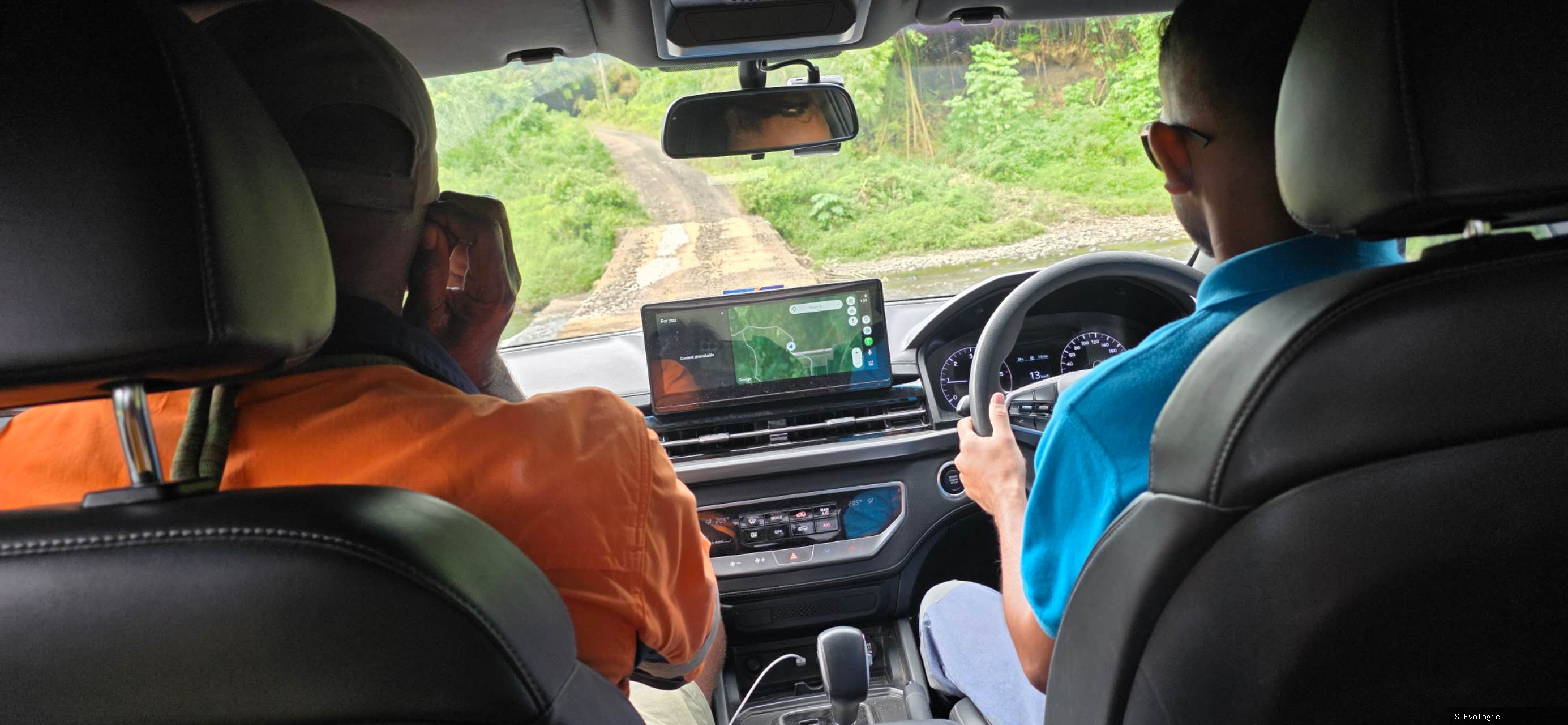
On one of the outer island deployments in our regional healthcare energy programme, there was no accommodation available anywhere near the work sites. The project team drove five to six hours every day — out to the facilities in the morning, back at the end of the working day.
Every hour on site was bracketed by hours of travel. A minor spare part, a small wiring issue, a component that needed to be sourced — any of these could cost half a day or more. The margin for error was narrow in a way that project plans designed for urban or mainland environments simply don't account for.
This is not an unusual situation in the Pacific. It is, in fact, a reasonably normal one. Remote facilities are remote. Accommodation is limited or non-existent. Supply chains are long. The gap between what a project plan assumes and what the environment requires can be significant.
What it teaches you is that Pacific project delivery is fundamentally about logistics discipline and time management at a granular level. It requires scheduling that accounts for real travel times, sequencing that anticipates access constraints, and teams that are operationally self-sufficient once they reach site.
Projects that treat logistics as a background assumption rather than a core design element consistently underestimate what Pacific delivery requires. The projects that deliver do the opposite.
The practical implication
Build logistics into project design from day one — not as a line item, but as a structural constraint that shapes scheduling, sequencing, team composition, and contingency planning. In the Pacific, how you get there is as important as what you do when you arrive.
Grid Instability Is Not an Edge Case in the Pacific — It Is the Baseline
Grid instability is one of the most common technical problems in Pacific solar deployments and one of the least discussed in project design documentation. Understanding it before commissioning starts is the difference between a smooth handover and a significant delay.
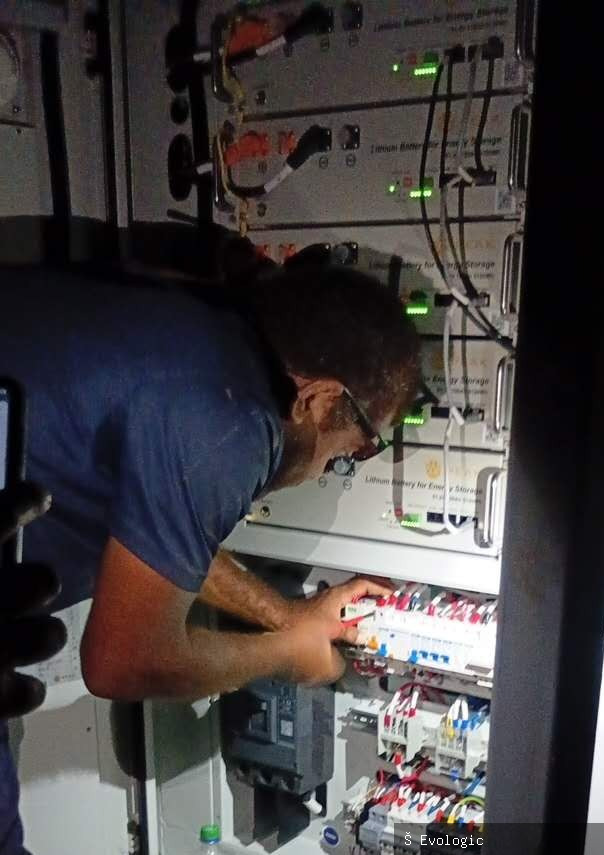
During commissioning at a set of healthcare facilities on a remote Pacific island, the solar inverter protection systems began shutting down unexpectedly. The equipment was functioning exactly as designed. The problem was the grid.
Frequent voltage fluctuations on the local utility network were triggering the inverters' protective shutdown mechanisms. Several electrical components were damaged in the process. The same issue — grid instability causing inverter protection trips — is one of the most common technical problems encountered in Pacific solar installations, and one of the most consistently underestimated at the project design stage.
In many Pacific Island environments, grid infrastructure is aging, supply is inconsistent, and voltage stability cannot be assumed. Designing a solar system as if it will connect to a stable, well-regulated grid — which is the default assumption in most technical specifications developed outside the region — creates real delivery risk.
Resolving the issue required root cause diagnosis under field conditions, coordination with the equipment supplier to adjust protection settings, and reconfiguration work carried out within the constraints of a five-to-six-hour daily site access window. It was solvable. But it took time, technical judgement, and an ability to work effectively between the technology and the operating environment.
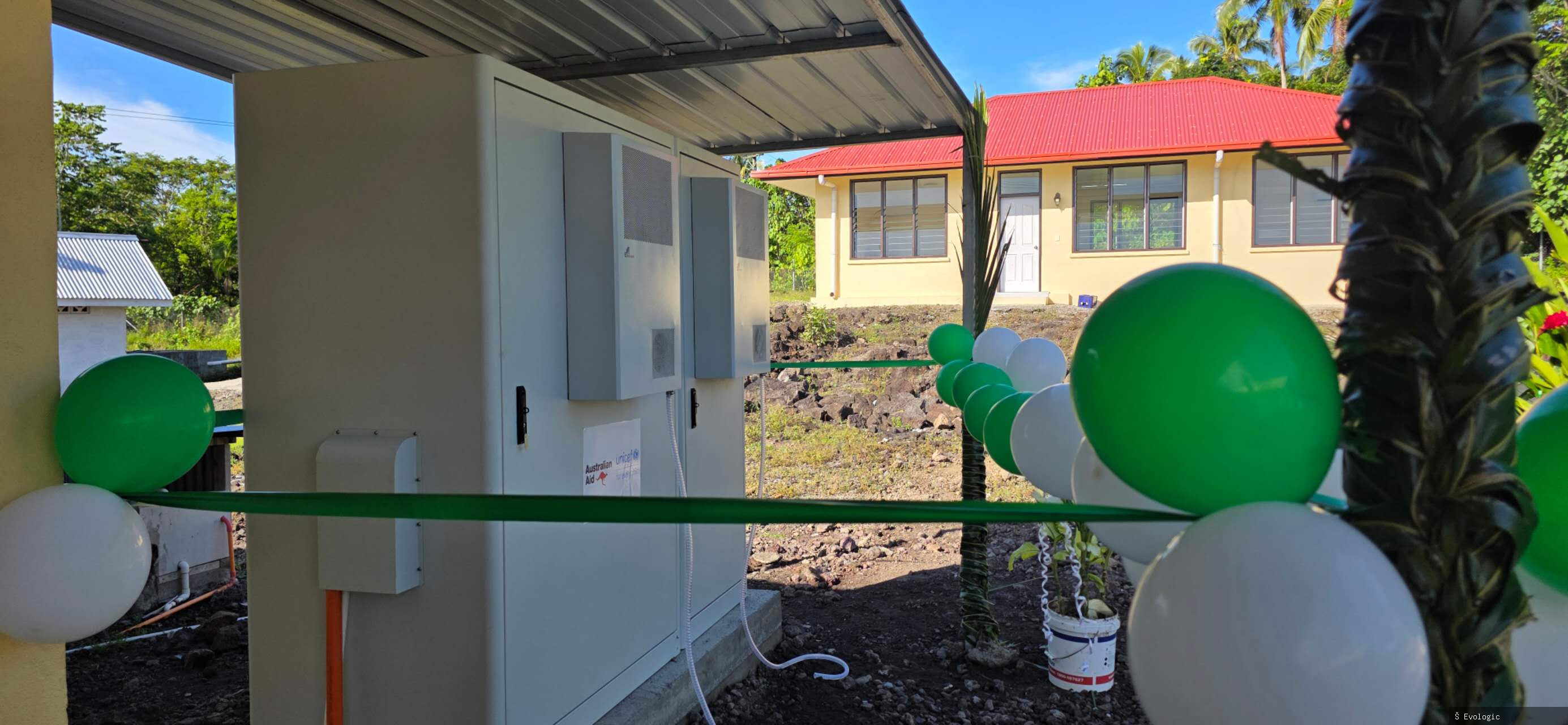
The facilities were successfully commissioned and handed over to the Ministry of Health. But the experience reinforced what we see consistently: technical solutions developed for other contexts need to be adapted, not simply applied, in the Pacific.
The practical implication
Pacific solar and energy systems need to be specified and commissioned with local grid conditions as a primary design input, not a secondary consideration. Inverter protection settings, voltage tolerances, and system configuration should be validated against actual site conditions before commissioning begins — not during it.
When the Government Moves the Sites: Managing Programme Continuity Through Sovereign Decision-Making
Sovereign governments in the Pacific can change programme parameters mid-implementation — and sometimes two decisions arrive at once. In this case, a government relocated all project sites and introduced a new regulation taking immediate effect, before the new locations had even been confirmed. This is what managing through that looks like.
Midway through one deployment in our regional programme, the relevant government advised that all planned healthcare facilities would be relocated to new sites. Equipment had already been delivered. Logistics were complete. Installation teams were ready to begin.
Then, in the same period — before the new site locations had even been confirmed — the government introduced a new regulatory requirement that took immediate effect. The programme now had to comply with the updated regulation before any installation work could proceed, at sites that had not yet been formally identified.
The programme paused. The approval process for the new locations, combined with the time required to understand and meet the new regulatory obligations, extended over six months.
This kind of situation is treated as exceptional in most project risk frameworks. In the Pacific, it is better understood as a structural feature of delivering infrastructure programmes in sovereign environments. Governments have the authority to revise priorities, change locations, introduce new requirements, and redirect programmes in response to domestic policy and administrative processes — and they exercise it. Two such decisions arriving simultaneously is not a worst-case scenario. It is the kind of compounding reality that Pacific delivery requires planning for.
The response that works is not to resist or work around these decisions, but to treat them as the operating environment rather than as deviations from it. That means maintaining programme readiness through the pause, keeping communication open and consistent across all stakeholders — the implementing agency, the government ministry, local partners, and suppliers — and being operationally positioned to move quickly once the regulatory pathway was clear and site approvals were confirmed.
Asset management during the pause required its own attention. Equipment already delivered and staged needed to be secured, maintained, and kept in deployable condition for a timeline that remained uncertain.
The programme ultimately continued and progressed. The relationships maintained through both disruptions — the site relocation and the regulatory change — were directly responsible for the project resuming without significant loss of momentum or stakeholder confidence.
The practical implication
Programme structures for Pacific infrastructure delivery need built-in mechanisms for managing sovereign decision-making and regulatory change — not as exceptions, but as expected events that can arrive simultaneously and without advance notice. Stakeholder relationships and asset readiness maintained through periods of programme disruption are often what determine whether a project recovers quickly or stalls permanently.